
Introduction: Why Creativity Still Feels Risky
Creativity Takes Courage
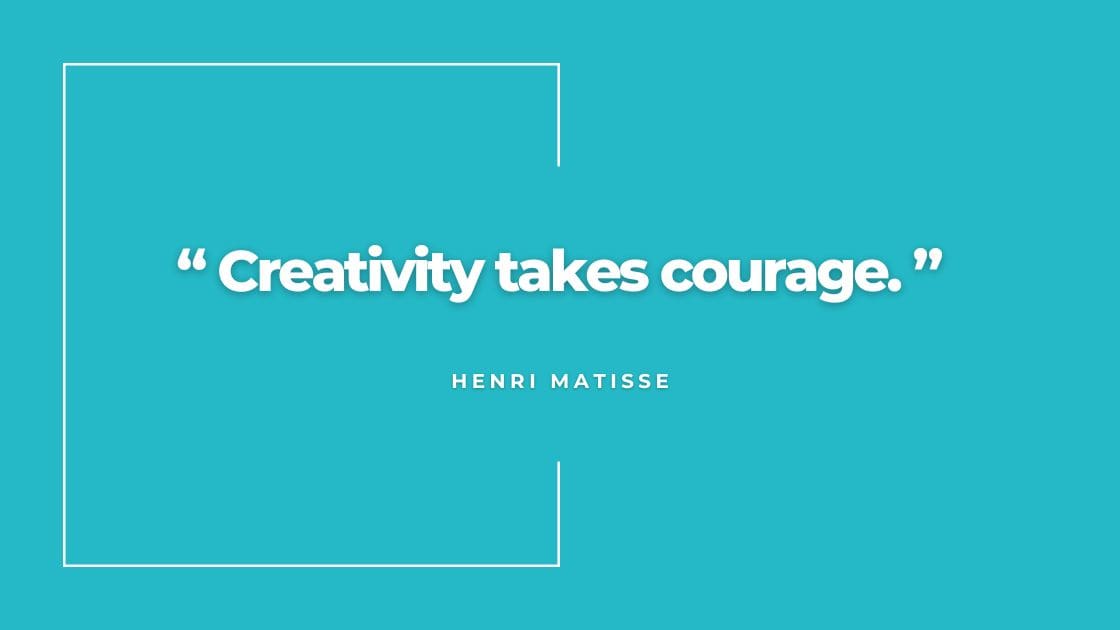
“Creativity takes courage” is one of those deceptively simple quotes that grows more powerful the longer you sit with it. Attributed to the French artist Henri Matisse, it cuts straight to a truth that many people feel but struggle to articulate, especially those building something visible in public. Creativity is rarely about talent alone. It is about the willingness to be seen, judged, and sometimes misunderstood.
In the modern online economy, this idea feels more relevant than ever. Whether you are launching an affiliate website, publishing your first blog post, experimenting with video content, or simply choosing a niche that feels slightly unconventional, creativity demands a decision. You must step beyond imitation and accept the uncertainty that comes with original thought. That moment, when you choose to create rather than copy, is where courage quietly enters the picture. 
What makes this quote timeless is that it reframes fear. Instead of seeing fear as a sign you are doing something wrong, Matisse’s words suggest the opposite. Fear is evidence that you are doing something meaningful. In affiliate marketing, this often shows up when you consider expressing an opinion, building a personal brand, or trusting your own perspective rather than following generic templates. Playing it safe can feel comfortable, but it rarely leads to distinction.
This is why the quote still resonates today. The internet is saturated with content, offers, and advice. What cuts through is not perfection, but personality, clarity, and conviction. Creativity becomes the lever that separates those who merely participate from those who build authority and trust. Courage is not loud or dramatic. It is the quiet decision to publish, test, refine, and keep going.
As you start this week, this quote invites a simple but challenging question. Where are you holding back creatively because you are afraid of being wrong, ignored, or criticised? That hesitation might be the clearest signal that you are standing on the edge of growth.
“Creativity Takes Courage” In Context
Henri Matisse was not only one of the most influential artists of the twentieth century, but also someone who repeatedly reinvented his own style. Known for his bold use of colour and form, Matisse often faced criticism for breaking with artistic conventions. His work challenged expectations, and that challenge came with resistance. Against this backdrop, “Creativity takes courage” reads less like a motivational slogan and more like lived experience.
When Matisse spoke about creativity, he was not referring to inspiration alone. He was speaking about the emotional risk involved in expressing something authentic. Every creative act exposes a part of the creator. For artists, that exposure happens on canvas. For affiliate marketers, creators, and entrepreneurs, it happens through content, offers, and ideas released into a public space.
The quote is remembered because it captures a universal tension. Creativity pushes against comfort. It asks you to trust your instincts before there is proof they will work. In business terms, this might look like choosing a niche others dismiss, adopting a voice that feels more personal, or building long term value rather than chasing short term trends. These decisions are rarely rewarded immediately, which is why courage matters so much.
Placed in today’s digital landscape, the quote takes on fresh meaning. Algorithms reward consistency, but audiences reward originality. The creators who stand out are often those willing to take thoughtful risks, even when the metrics are uncertain. Matisse’s insight reminds us that courage is not about recklessness. It is about commitment to a vision before it is validated.
Seen this way, the quote becomes a quiet strategy as much as a philosophical statement. Creativity is not an optional extra. It is a competitive advantage. Courage is the price of entry. Those willing to pay it are the ones who shape their own path rather than following someone else’s map.
Finding the Deeper Meaning
At its core, “Creativity takes courage” is not really about creativity at all. It is about vulnerability. Creativity is simply the visible outcome of a deeper internal process where you choose honesty over safety. The moment you create something original, you are revealing how you see the world. That exposure is what makes creativity feel uncomfortable, and why courage is required to sustain it.
Psychologically, this taps into our deep need for social acceptance. Humans are wired to belong, which means we naturally avoid actions that might invite criticism or rejection. Creativity disrupts that instinct. When you publish a blog post, launch a new idea, or build a brand around your own perspective, you are implicitly saying, this is what I believe, this is what I value, and this is how I think. The fear that follows is not weakness. It is biology doing what it has always done.
From a philosophical standpoint, creativity has long been linked with personal responsibility. Existential thinkers argued that meaning is not discovered, but created. In that sense, creativity is an act of self authorship. You are choosing to define something rather than inherit it. That is why imitation feels safe and originality feels heavy. One requires effort. The other requires ownership.
In modern terms, creativity also demands patience. Results rarely appear quickly. Courage is not just needed at the start, but during the long stretches where progress feels invisible. This is where many people stop. They mistake discomfort for failure, when in reality discomfort is often a sign that growth is underway.
For affiliate marketers and business builders, this deeper meaning matters. Creativity is not about flashy ideas or constant innovation. It is about consistency of thought. It is about trusting your judgement long enough to let it mature. Courage becomes the ability to stay with an idea through uncertainty, rather than abandoning it for something easier or more familiar.
Seen this way, the quote becomes a reminder that creative courage is not a personality trait. It is a practice. Each time you choose to express rather than hide, to test rather than stall, you strengthen it.
Relevance to Life and Business
In everyday life, courage driven creativity often shows up quietly. It might be speaking up in a meeting when you have a different viewpoint, changing direction in your career, or committing to a long term goal that others do not immediately understand. These moments rarely look dramatic, but they shape the trajectory of your life far more than safe decisions ever could.
In business, and especially in affiliate marketing, this principle becomes even more practical. Many people enter the space looking for certainty. They want guaranteed niches, proven funnels, and step by step formulas. While structure is useful, over reliance on it can suffocate creativity. When everyone follows the same playbook, differentiation disappears. Courage is what allows you to adapt advice to your own strengths rather than copying it blindly.
Applied properly, this quote encourages a shift in mindset. Instead of asking whether something will work, a more useful question becomes whether it aligns with how you want to build. That subtle change moves you from fear based decision making to intention based action. It also reduces burnout, because you are no longer forcing yourself into someone else’s model of success.
Practically, this might mean choosing to build authority through thoughtful content rather than chasing trends, or developing a personal voice even if it feels less polished at first. It might mean focusing on long term trust instead of short term conversions. These decisions often feel risky in the moment, but they compound over time.
For teams, leaders, and employees, the lesson is similar. Organisations stagnate when creativity is punished or ignored. Individuals stall when they wait for permission to think differently. Courage in work environments is often about small acts of initiative. Suggesting improvements, experimenting with processes, or taking responsibility beyond your job title.
Ultimately, the relevance of this quote lies in its practicality. Creativity is not reserved for artists or entrepreneurs. It is a daily choice to engage actively rather than passively. Courage is the mechanism that makes that choice possible. When you embrace it, both your work and your sense of purpose tend to follow.
Business Connection
If there is one place where “Creativity takes courage” becomes unmistakably real, it is in the business journey. Building something from the ground up exposes you to uncertainty in ways few other paths do. There are moments when money is tight, decisions feel heavy, and progress appears painfully slow. In those moments, creativity is not a luxury. It is a survival skill.
For affiliate marketers especially, the early stages can feel unforgiving. You might be working without income, investing time instead of money, and questioning whether your efforts are making any difference at all. This is where courage quietly matters most. Creativity allows you to find alternatives when resources are limited. It helps you see opportunity where others see constraint. That might mean creating content instead of buying traffic, building relationships instead of chasing volume, or focusing on clarity rather than complexity.
Self doubt often enters when results lag behind effort. It whispers that you are not cut out for this, that others are doing it better, or that you started too late. Courage is not the absence of those thoughts. It is the decision to continue despite them. Creativity gives you a way forward. You experiment, refine, and adapt instead of quitting. Over time, this builds confidence that no course or shortcut ever could.
Poor investments and false starts are also part of the process. Very few successful businesses are built without missteps. The creative response is not regret, but learning. Each mistake becomes data. Each setback becomes insight. Courage allows you to stay open rather than defensive, and that openness is what leads to better decisions next time.
Try This This Week
Choose one area of your business where you have been copying others by default and ask how you could approach it in your own way. It could be your content angle, your niche positioning, or the way you communicate with your audience. Commit to one small creative experiment and see it through without judging the outcome too early. Courage grows through action, not overthinking.
Conclusion: Courage Before Confidence
As this week begins, it is worth remembering that confidence rarely comes first. Courage does. Henri Matisse understood that creativity is not about bold gestures or dramatic reinvention. It is about the willingness to show up honestly, even when the outcome is uncertain.
In business and in life, waiting until you feel ready often means waiting forever. Progress belongs to those who act while still unsure, who create while still learning, and who trust that clarity will follow movement. When you embrace the idea that creativity takes courage, you give yourself permission to grow in public rather than hiding in preparation.
Let this quote become a quiet mantra as you work this week. When doubt appears, let creativity answer it. When fear surfaces, let courage guide your next step. You do not need to do everything at once. You only need to take the next honest action.
Your Next Step
If you are building, learning, or refining your path in affiliate marketing, surround yourself with insight that supports long term thinking and sustainable growth. Visit Affiliate Choice to continue developing the clarity, confidence, and creative courage needed to build something that lasts.
Creativity takes courage. Courage creates momentum. Momentum changes everything.