
Introduction: Why Your Facebook Ads Strategy Needs a Reset
For many affiliate marketers, Facebook advertising has long been the cornerstone of profitable campaigns. Yet, the landscape has shifted dramatically. Tactics that delivered strong results just a few years ago are now falling flat, leaving advertisers frustrated as costs rise and performance declines. The truth is simple: the rules of Facebook advertising have changed, and clinging to outdated methods will only drain budgets without delivering meaningful returns.
Today’s environment presents unique challenges. Cost-per-thousand impressions (CPMs) continue to climb, forcing advertisers to spend more just to maintain visibility. Attribution has become increasingly difficult, with Meta’s evolving algorithms demanding cleaner, more accurate data than ever before. Ad fatigue is another hurdle—consumers are bombarded with content, and only the most engaging, authentic creative cuts through the noise. To make matters worse, many marketers still rely on old-school tactics such as over-segmented targeting or excessive audience breakdowns, which actually work against Meta’s AI-driven optimisation systems. 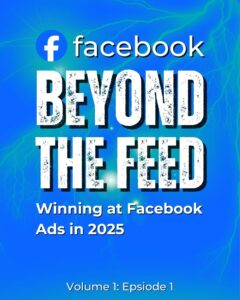
But here lies the opportunity. By shifting your approach and adopting strategies designed for 2025, you can turn these challenges into competitive advantages. Whether you’re an experienced affiliate marketer managing multiple ad accounts or a newcomer seeking a foothold, the Facebook Ads Playbook presented here provides a step-by-step framework. From rethinking campaign structures and creating high-performing native-style content, to scaling budgets safely and harnessing the power of accurate data, this guide is designed to help you thrive in an increasingly complex advertising ecosystem.
Affiliate Choice is committed to equipping marketers with strategies that work in the real world, not just in theory. This playbook will cut through the clutter and show you how to build campaigns that not only survive, but excel in today’s competitive environment. By the end, you’ll understand exactly what it takes to future-proof your Facebook advertising—and why adaptability, not nostalgia, is the true driver of sustainable success.
Campaign Structure: Less is More
One of the most significant shifts in Facebook advertising over the past two years is how campaign structures are best managed. Where once it was considered smart practice to break audiences into highly specific groups—cold vs warm, lookalikes vs interests, even separating ad sets by device or age—today that level of micromanagement is more likely to hinder than help. Meta’s algorithms have grown far more sophisticated, and advertisers who try to over-segment often find themselves spreading budgets too thin, duplicating effort, and competing against themselves in the auction.
The new rule is simple: consolidation beats fragmentation. Advantage Plus campaigns, now the backbone of Meta’s ad platform, have proven to be a reliable and scalable option for the majority of advertisers. By consolidating spend into fewer campaigns—sometimes even running just a single Advantage Plus campaign—you allow Meta’s machine learning systems to gather more data, optimise faster, and allocate your budget where it delivers the strongest return.
There are exceptions, of course. If you are targeting multiple countries with distinctly different offers, or you operate across multiple product ranges with unique audiences, then creating separate campaigns makes sense. But the default position for affiliate marketers in 2025 should be to start simple. Fewer campaigns mean:
- Faster learning cycles — more conversions per campaign give Meta clearer signals.
- Reduced overlap — minimises the risk of multiple ad sets chasing the same people.
- Cleaner data — performance trends are easier to interpret when results aren’t fragmented.
Another common misconception is that cold and warm audiences must be handled separately. In reality, Meta increasingly treats targeting instructions as suggestions rather than hard rules. Even when you attempt to ringfence cold or warm segments, the algorithm often blends them. As a result, it is usually more effective to combine these groups in a single campaign and allow the system to distribute ads according to behaviour. This not only simplifies management but also creates stronger optimisation loops.
For affiliate marketers, the lesson is clear: resist the temptation to over-engineer. Start with fewer campaigns, broader targeting, and multiple creatives within each ad set. Trust Meta’s AI to do what it does best—find the right person, at the right time, with the right message. Your role is to provide the raw material: good offers, compelling creatives, and clean data. The rest is noise.
Creative Strategy: Content that Feels Native
If campaign structure is the engine of Facebook advertising, creative is the fuel. No amount of optimisation or targeting can rescue an ad that looks out of place in the feed. In 2025, the most effective Facebook ads don’t feel like ads at all. They feel like content—authentic, engaging, and native to the platform. For affiliate marketers, mastering this shift is essential to staying competitive.
The strongest format today is User-Generated Content (UGC) video. Audiences have grown sceptical of polished, brand-heavy creative that screams “advertisement.” Instead, they respond to short, natural clips that resemble the content they consume from friends, influencers, or communities they trust. A testimonial filmed on a smartphone, a quick product demo, or even a candid “unboxing” can outperform a high-budget production. Why? Because it feels real. The viewer leans in, rather than scrolling past.
For affiliates, producing enough UGC can seem daunting, but there are practical solutions:
- Leverage influencers — micro-influencers are especially valuable because their content feels authentic and their audiences are highly engaged.
- Hire UGC creators — entire marketplaces now exist where creators sell ready-to-use ad content that looks native to Facebook or Instagram.
- Recycle proven ads — take a single successful 45-second video and vary the first 3 seconds (the hook). Record in different locations, change intro lines, and create multiple “new” ads from the same core asset.
Ad fatigue is another hurdle. Even the most successful creative eventually loses its impact. However, by simply altering hooks and settings, you can extend the lifespan of a winning ad tenfold. Consider this example: if 90% of people drop off within the first three seconds, refreshing only the intro keeps your campaign feeling fresh without the need to constantly reinvent the entire asset.
Importantly, native-style content isn’t just for e-commerce. Service providers, SaaS companies, and even B2B affiliates can benefit. When your ad resembles something your audience would willingly watch, your click-through rate rises, costs decrease, and conversions follow. The real advantage comes when your competitors are still clinging to glossy, corporate-style ads while your UGC builds connection and trust.
As you design your creative strategy, remember this: on Meta’s platforms, authenticity wins. Invest in relatable content, prioritise variety over perfection, and always test multiple hooks. By doing so, you will not only capture attention but also create an ad environment that Meta’s algorithm loves to reward.
Budget and Scaling: Growth Without Risk
When it comes to Facebook advertising, scaling is often where affiliate marketers stumble. The temptation is to dive in with a large budget, assuming more spend equals more conversions. In reality, scaling too quickly can be a costly mistake. The smarter approach is to start small, prove your offer, and then scale gradually once you’ve achieved a positive return on ad spend (ROAS).
Begin with a budget you can afford to lose. This protects you during the testing phase, where campaigns are at their most unpredictable. Use this stage to experiment with creatives, refine your messaging, and identify the ads that resonate. Once you see consistent profitability, then and only then should you look to increase spend.
When scaling, it’s usually best to increase budget within existing campaigns rather than creating new ones. Advantage Plus campaigns, in particular, are designed to handle higher budgets efficiently, as they pool data and optimise across larger audiences. This avoids resetting the learning phase and keeps performance stable. A good rule of thumb is to scale incrementally—10–20% increases every few days—rather than doubling or tripling your spend overnight.
However, scaling isn’t just about money. As spend rises, your ads will reach more people and appear more frequently. That means creative diversity becomes essential. A single winning ad might perform beautifully at £100 per day, but once it’s shown to ten times the audience, fatigue sets in quickly. To maintain momentum, introduce new creatives alongside your top performers. Vary hooks, switch settings, and refresh visuals to keep content engaging while ensuring Meta has multiple strong assets to distribute.
For affiliates, this principle is especially important. Whether you’re promoting physical products, digital services, or subscription offers, scaling requires a balance between budget and content. If you try to grow spend without feeding the algorithm with fresh creative, your ROAS will deteriorate, leaving you frustrated. Instead, treat scaling as a two-pronged process: increase budget steadily while continually rotating new creatives into the mix. Done right, this approach allows you to build sustainable growth rather than short-lived spikes.
Data and Attribution: Fuel for Meta’s AI
Even the most carefully crafted campaign will fail without accurate data. Meta’s algorithms rely on clean, reliable signals to identify who converts, how much they’re worth, and where they can be found again. For affiliate marketers, data is no longer a back-end detail—it is the foundation of performance.
The first step is ensuring both the Meta Pixel and the Conversions API (CAPI) are installed and functioning correctly. Too many advertisers mistakenly treat this as an either/or choice. In reality, you need both. The Pixel captures browser-based behaviour, while CAPI records server-side events. Together, they provide the AI with a far more accurate view of your customer journey. Without this dual setup, you risk incomplete attribution and weaker optimisation.
Beyond these basics, consider the value of external data uploads. Meta can’t automatically track every touchpoint. For example, an email subscriber who hasn’t engaged in months, or a customer list from outside the platform, represents valuable data that Meta’s AI won’t otherwise see. Uploading these lists into your ad account allows the system to refine targeting and re-engage warm audiences you’d otherwise miss.
At higher levels of spend, advanced tracking solutions become essential. Tools like Hyros are widely used by top advertisers because they bridge the gap between what Meta reports and what actually happens. Consider a scenario where Meta attributes £40,000 in revenue, but in reality the campaign generated £60,000 once recurring payments or cross-channel actions are accounted for. Without accurate attribution, you might wrongly conclude a campaign is underperforming, when in fact it’s highly profitable. Hyros and similar tools provide the clarity needed to scale with confidence.
Data accuracy also delivers a compounding effect. Even small improvements—say a 5% boost in attribution accuracy—can yield dramatic gains in ROAS, often exceeding 20–25%. That margin can mean the difference between a campaign you scale aggressively and one you cut prematurely. For affiliates, this is particularly critical when operating in competitive niches where every percentage point matters.
Ultimately, think of data as the fuel powering Meta’s optimisation engine. Clean, comprehensive inputs give the AI the intelligence it needs to place your ads in front of the right people. Neglect it, and you’ll always feel like you’re fighting against the platform. Prioritise it, and you unlock Meta’s full potential.
Measurement and Optimisation: Focusing on What Matters
For affiliate marketers, it’s easy to get distracted by surface-level numbers. A high click-through rate (CTR) or plenty of engagement might look promising on the surface, but if those clicks and likes don’t lead to conversions, they are little more than vanity metrics. The true test of campaign success is whether your advertising generates a return—and that’s why return on ad spend (ROAS) and cost per conversion should be the guiding lights of your optimisation strategy.
Start by setting clear benchmarks. What is an acceptable ROAS for your business model? What is the maximum cost per lead or sale you can sustain? These numbers will differ depending on whether you’re promoting high-ticket services, physical products, or recurring subscription offers, but without them you’ll never know whether your campaigns are succeeding. Once you have defined these thresholds, every decision—whether to keep, pause, or scale an ad—becomes far more straightforward.
It’s also important to understand how Meta now distributes ads within a single ad set. The platform often uses certain ads as “top-of-funnel” hooks to capture attention, while relying on other ads in the same set to close the conversion. This means that a top-of-funnel ad may show poor ROAS on its own, but it still plays a critical role in the customer journey. If you pause it prematurely, the high-performing conversion ad may suddenly drop in effectiveness. In short: don’t rush to switch off ads simply because they appear weaker at first glance. Instead, focus on whether Meta continues to spend on them. If the algorithm allocates budget, it’s because the ad contributes to the funnel. If it doesn’t spend, that’s your signal to replace it.
Optimisation is best viewed as a process of refinement rather than one-off decisions. Continuously analyse which hooks, formats, and creatives are generating results. When you identify patterns, double down. If a certain style of intro drives conversions, test variations of it. If a format falls flat, replace it with something fresh. Over time, this consistent feedback loop compounds—just like regular training at the gym, the real gains come from persistence and repetition, not a single breakthrough moment.
By focusing on the right metrics and resisting the temptation to chase vanity numbers, you can build campaigns that are not only profitable today but also capable of sustaining performance over the long term.
Beyond the Buttons: Building a True Competitive Edge
Getting your campaign structure, creative strategy, and data tracking right is essential—but it will only ever take you so far. The businesses that achieve extraordinary results on Facebook don’t succeed solely because of technical precision. They win because they bring something extra to the table: a competitive advantage that goes beyond the buttons.
What does this mean in practice? Quite simply, you need an edge that Meta’s optimisation tools cannot provide. This could be a stronger brand, a more compelling offer, or a customer experience that builds loyalty beyond a single click. If your product or service is genuinely better than the alternatives, your ads will naturally perform better. Audiences are more likely to stop, pay attention, and take action when they believe in what you’re offering.
For affiliate marketers, building this edge often starts with trust and credibility. A personal brand, for instance, can dramatically improve results. When people recognise your name or face from valuable content they’ve already consumed, they’re far more receptive to your ads. This isn’t limited to influencers. Affiliates can build credibility by consistently publishing educational content, reviews, or case studies that establish authority in their niche. Over time, that recognition carries into paid campaigns, lifting engagement and conversions.
Another route is to differentiate through offers and positioning. If every competitor promotes the same product with the same generic messaging, you’ll all compete on price. But if you craft a unique angle—whether it’s an exclusive bonus, a stronger guarantee, or a creative storytelling approach—you stand out. Suddenly, the same ad spend produces superior results, because your audience perceives added value others can’t match.
Ultimately, Facebook advertising is no longer a game of who can press the right buttons most effectively. Meta’s AI levels that playing field by doing much of the heavy lifting for everyone. What separates winners from losers is what exists outside the ad account: brand equity, authority, and authenticity. If you want to thrive in 2025 and beyond, invest as much in building your competitive edge as you do in campaign optimisation. The combination of technical mastery and true differentiation is what leads to long-term success.
Conclusion: The Future of Facebook Advertising
Facebook advertising has always been a moving target. What worked yesterday can quickly become ineffective, and relying on outdated tactics only leads to rising costs and declining performance. For affiliate marketers, the challenge—and the opportunity—lies in adapting faster than the competition. The six plays outlined in this guide provide a clear roadmap: simplify campaign structures, embrace native-style creatives, scale budgets responsibly, prioritise accurate data, optimise around meaningful metrics, and build a competitive edge that goes beyond the buttons.
The underlying theme is adaptability. Meta’s platform is increasingly driven by artificial intelligence, and the more freedom you give it—with consolidated campaigns, fresh creative, and clean data—the stronger your results will be. Instead of fighting the system with micro-targeting or vanity optimisations, lean into the tools that Meta has built. Let the algorithm do what it does best, and focus your energy on the elements you can truly control: the quality of your offers, the authenticity of your content, and the trust you establish with your audience.
For newer affiliate marketers, the key takeaway is not to overcomplicate things. Start small, test widely, and build confidence in your campaigns before scaling. For seasoned professionals, the challenge is to refine your strategy—moving away from rigid structures and towards flexible, data-driven decision-making that aligns with Meta’s direction of travel. In both cases, success depends on recognising that Facebook advertising in 2025 is not just about technical execution but about the broader context in which your campaigns operate.
The future of Facebook ads belongs to those who adapt quickly, measure accurately, and offer something that competitors cannot replicate. By implementing these strategies, you position yourself not just to survive, but to thrive in a competitive landscape. Whether you’re running your first campaign or managing a portfolio of high-spend accounts, the path forward is the same: embrace simplicity, prioritise authenticity, and continually refine. That is how you turn Facebook advertising from a source of frustration into a consistent, scalable driver of growth.